
Do Olympic Coaches Get Medals?
Do Olympic Coaches Get Medals? & Other Medal Questions
Related Medal Questions
- Do Olympic Coaches Get Medals?
- What Are the Requirements for Blessing a Religious Medal?
- What Is the Proper Etiquette for Displaying Military Medals?
- Which Countries Have Won the Most Paralympic Medals?
- What Rules Govern Olympic Medal Engravings?
- What Is the Meaning of the St. Michael Medal?
- Can Military Medals Be Used in Historical Reenactments?
- Do Olympic Flag Bearers Get Special Medals?
- Does the Material of a Religious Medal Have Significance?
- Is It Legal for Athletes to Sell Their Olympic Medals?
Do Olympic Coaches Get Medals?
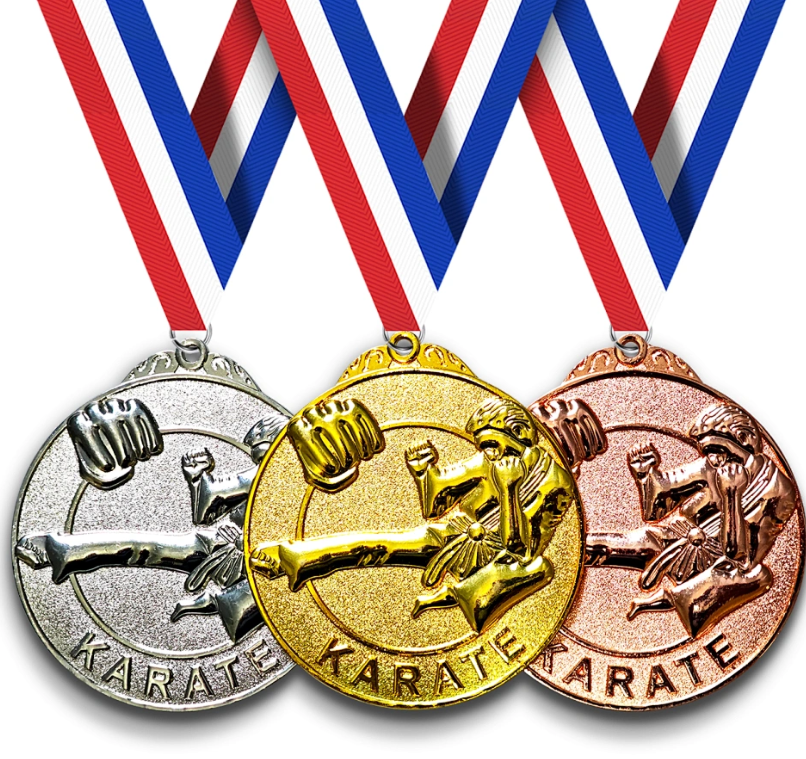
No, Olympic coaches do not receive official Olympic medals—these are reserved exclusively for the competing athletes. However, many national Olympic committees and sports federations honor coaches with commemorative medals or plaques to recognize their role in an athlete’s success. For example, U.S. Olympic coaches often receive a "Coach’s Medal" that mirrors their athlete’s achievement (e.g., a gold-colored coach medal if their athlete won gold). These are not official IOC medals but symbolic tokens of appreciation. Some teams also include coaches in medal ceremonies, allowing them to stand with athletes on the podium, even though they don’t receive the same medal as competitors.
What Are the Requirements for Blessing a Religious Medal?
Blessing a religious medal typically requires a member of the clergy (e.g., a priest, pastor, or rabbi) and follows specific traditions of the faith. For Catholic medals (like the St. Benedict Medal or Miraculous Medal), the priest uses holy water and recites prayers specific to the medal’s purpose, invoking God’s protection or blessings. There are no strict "requirements" for the medal itself—any properly made medal with the traditional symbols can be blessed. The key elements are the clergy member’s authority to bless, the use of faith-specific prayers, and the intention to consecrate the medal for spiritual use. Some faiths allow laypeople to bless medals in certain circumstances, but formal blessings are usually reserved for clergy to maintain the medal’s sacred significance.
What Is the Proper Etiquette for Displaying Military Medals?
Displaying military medals follows etiquette that honors their significance and the service member’s achievement. Key guidelines include: 1. Order of precedence: Medals should be arranged from highest to lowest precedence (e.g., Medal of Honor first, then Distinguished Service Cross, etc.)—same as when worn on a uniform. 2. Framing: Use shadow boxes with acid-free materials to protect medals and ribbons from damage. Include nameplates with the service member’s details and medal citations if available. 3. Location: Display medals in a respectful setting (e.g., home office, den) rather than casual spaces. 4. Posthumous display: For deceased veterans, medals can be displayed by family members with the same care. 5. Avoid replicas: Display only original medals or clearly marked replicas to maintain integrity. Following these rules ensures medals are shown with the dignity they deserve.
Which Countries Have Won the Most Paralympic Medals?
As of 2024, the United States leads in total Paralympic medals with over 2,600 across summer and winter Games, followed by Great Britain (over 1,500) and Germany (over 1,400). The U.S. dominance stems from strong participation in summer sports like swimming, track and field, and wheelchair basketball, where American athletes have won hundreds of gold, silver, and bronze medals. China has rapidly risen in the rankings since first participating in 1984, now ranking fourth with over 1,300 total medals, excelling in table tennis, swimming, and track events. Host countries often see a temporary boost in medal counts due to home-field advantage, but the U.S., Great Britain, and Germany have maintained consistent top rankings across decades of Paralympic competition.
What Rules Govern Olympic Medal Engravings?
Olympic medal engravings follow strict IOC rules to ensure consistency and accuracy. Key guidelines include: 1. Content: Each medal must be engraved with the athlete’s name, sport, event, and the Games’ year and location. 2. Timing: Engravings are done after the medal ceremony (within 24-48 hours) to ensure correct spellings and results. 3. Placement: Engravings appear on the edge or reverse side of the medal (never the front, which features the standard Olympic design). 4. Font and size: Host cities must use a clear, legible font—typically a simple sans-serif style—to ensure readability. 5. Accuracy: Athletes can review proofs before final engraving to correct name spellings or event details. These rules ensure each medal is uniquely identified while preserving the integrity of the Olympic design.
What Is the Meaning of the St. Michael Medal?
The St. Michael Medal is a religious medal honoring St. Michael the Archangel, a figure in Catholic, Orthodox, and Anglican traditions known as a protector and defender against evil. The medal typically features an image of St. Michael defeating a dragon (symbolizing Satan) and often includes the inscription "Quis ut Deus?" ("Who is like God?"—a reference to St. Michael’s name meaning "Who is like God"). For believers, the medal symbolizes spiritual protection, courage, and the strength to overcome temptation or adversity. It is often worn by those in professions requiring bravery (e.g., police, military, firefighters) and is also given to individuals facing difficult challenges. Like other religious medals, it is often blessed by a priest to enhance its spiritual significance.
Can Military Medals Be Used in Historical Reenactments?
Yes, military medals can be used in historical reenactments, but with important guidelines to ensure respect and accuracy. Reenactors typically use replicas of medals (clearly marked as such) rather than original medals, which are often valuable historical artifacts. When wearing replica medals, reenactors must accurately represent the medals that would have been awarded to the historical figure or unit being portrayed—for example, a WWII Army reenactor should not wear a Vietnam-era medal. It is also considered disrespectful to wear replica medals of high honors (like the Medal of Honor) without proper historical context. Many reenactment groups have strict rules about medal use to maintain historical accuracy and honor the service members who earned the original medals.
Do Olympic Flag Bearers Get Special Medals?
No, Olympic flag bearers do not receive special medals for their role in opening or closing ceremonies. Flag bearers are chosen to represent their country’s team, often due to their athletic achievements, leadership, or sportsmanship, but the honor is ceremonial rather than tied to medal awards. However, if a flag bearer also wins a competition, they receive the standard Olympic medal for their sport (e.g., gold, silver, or bronze) like any other athlete. Some national Olympic committees give flag bearers a commemorative pin or certificate to mark the occasion, but these are not official Olympic medals. The role of flag bearer is primarily symbolic, representing national pride rather than earning a special medal.
Does the Material of a Religious Medal Have Significance?
Yes, the material of a religious medal often carries symbolic significance, though the medal’s meaning is primarily tied to its design and purpose. Common materials and their symbolism include: 1. Gold: Represents purity, divinity, and spiritual wealth—often used for medals honoring Jesus or Mary (e.g., Miraculous Medal). 2. Silver: Symbolizes virtue, humility, and redemption—used for medals like the St. Christopher Medal. 3. Bronze: Associated with strength and endurance—used for medals honoring saints known for perseverance. 4. Metal alloys: More affordable options that maintain the medal’s symbolic meaning without the cost of precious metals. While material adds symbolic depth, believers emphasize that a medal’s spiritual power comes from faith, not the material itself—even simple metal medals are considered meaningful if blessed and used with devotion.
Is It Legal for Athletes to Sell Their Olympic Medals?
Yes, it is legal for athletes to sell their Olympic medals in most countries, including the United States, as the medals are considered the athlete’s personal property once awarded. However, selling Olympic medals is rare due to their sentimental and historical value. When sales do occur, they often happen through auction houses, with proceeds sometimes donated to charity. For example, several Olympic gold medalists have sold their medals to raise funds for nonprofits or community causes. The International Olympic Committee (IOC) does not prohibit medal sales, though some national Olympic committees discourage the practice to preserve the medals’ symbolic value. Stolen Olympic medals cannot be legally sold, as they are considered stolen property, but legitimately owned medals can be sold freely.


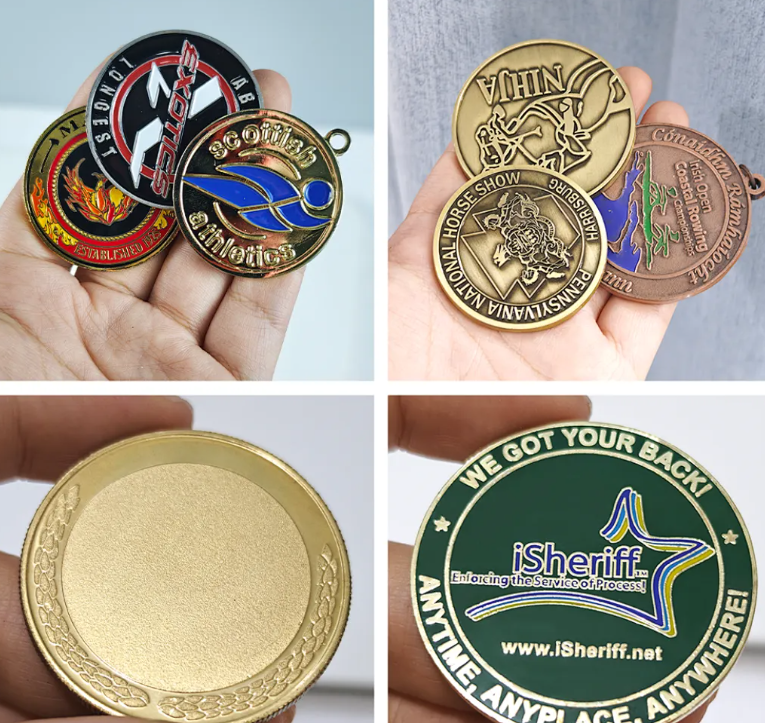
Longyi Metal Craft Products Co., Ltd, in Dongguan City, Guangdong Province focuses on the field of metal gift foreign trade. It‘s exquisite craftsmanship and efficient service have made it the prefered supplier of the world's top 500 companies.Mainly produces and customizes various medals, badges, hat pins and golf divot tool。
The factory is equipped with fully automatic casting production lines and CNC finishing equipment. The technical team independently developed 16 quality control nodes, from 3D modeling, precision casting tonano-electroplating. The original mirror polishing process makes the product gloss reach more than 98%,and the defect rate is less than 0.3%.
Support small batches of spot direct shipments, 48 hours of rapid delivery to ensure 15 days of delivery for European and American customers.24-hour online response to needs.cumulatively developed 800+ customized solutions for global customers, and the customerre purchase rate has exceeded 65% for 5 consecutive years.From pre - sale design, production, to delivery, we strictly control every detail. Your complete satisfaction is quaranteed!
What Are Olympic Test Event Medals?
Do Paralympians Get the Same Medals as Olympians?


For more questions please
contact us

+86 1347760487

sales15@longyimetal.com

BUILDING 1, NO. 7, YINGHE 2ND STREET, YAOSHAN, XIEGANG TOWN, DONGGUAN CITY, GUANGDONG PROVINCE