
Do Paralympians Get the Same Medals as Olympians?
Do Paralympians Get the Same Medals as Olympians? & Other Medal Questions
Related Medal Questions
- Do Paralympians Get the Same Medals as Olympians?
- What Protection Does a St. Benedict Medal Provide?
- How to Authenticate a World War II Medal?
- What Rules Govern Olympic Medal Designs?
- Can Military Medals Be Awarded Posthumously?
- Is a St. Christopher Medal Only for Travel?
- Do Sponsors Influence Olympic Medal Designs?
- What Do the Ribbons on Military Medals Mean?
- Is It Okay for Non-Believers to Wear Religious Medals?
- How Is a Medal Awarded if There’s a Tie at the Olympics?
Do Paralympians Get the Same Medals as Olympians?
No, Paralympians do not get identical medals to Olympians, but the two share core similarities in purpose and material standards. Both Paralympic medals and Olympic medals follow the International Olympic Committee (IOC) material rules: gold medals are 92.5% silver with gold plating, silver medals are 92.5% pure silver, and bronze medals are copper-zinc-tin blends. The key differences are in design: Paralympic medals include accessibility features (e.g., indentations for athletes with visual impairments to identify medal type) and unique motifs reflecting Paralympic values of courage and inclusion. For example, the 2020 Tokyo Paralympic medals had one indentation for gold, two for silver, and three for bronze—a feature not present on Olympic medals.
What Protection Does a St. Benedict Medal Provide?
In Catholic tradition, the St. Benedict Medal is believed to provide spiritual protection against evil, temptation, and harm. The medal’s design—including Latin inscriptions like "Vade retro Satana" (Begone, Satan) and symbols like a cross, raven, and cup—ties to St. Benedict’s life and his role as a protector against spiritual and physical dangers. Catholics who wear or carry the medal (often after it is blessed by a priest) believe it serves as a reminder of their faith and a way to seek God’s protection through St. Benedict’s intercession. The medal is not seen as a "talismans" but as a sacramental—an object that deepens devotion and invites divine guidance, particularly in times of uncertainty or risk.
How to Authenticate a World War II Medal?
Authenticating a World War II medal requires checking key details to distinguish genuine medals from reproductions: 1. Material: Genuine WWII medals use specific metals (e.g., Bronze Star Medals are bronze-plated brass, Purple Hearts are copper with purple enamel). 2. Engravings: Look for crisp, consistent engravings (e.g., manufacturer marks like "Balfour" or "Whitehead & Hoag" on U.S. medals)—reproductions often have blurry text. 3. Ribbons: Original WWII medal ribbons use period-correct fabrics and color patterns (e.g., the Purple Heart ribbon is solid purple with no modern synthetic materials). 4. Provenance: Check for accompanying documents (e.g., medal certificates, discharge papers) that link the medal to a specific veteran. For valuable medals, consult a specialist in military medals or use authentication services from organizations like the Orders and Medals Society of America.
What Rules Govern Olympic Medal Designs?
Olympic medal designs are governed by strict rules set by the International Olympic Committee (IOC) to ensure consistency while allowing host-city creativity. Key rules include: 1. Material standards: Gold medals must have at least 6 grams of gold plating and 92.5% silver; silver medals 92.5% silver; bronze medals copper-dominant alloys. 2. Weight: All medals must weigh at least 500 grams. 3. Front design: Must feature the Olympic rings and a generic "victory" motif (e.g., a figure holding a laurel wreath)—host cities cannot alter this side. 4. Reverse design: Host cities can customize this side to reflect local culture, history, or art (e.g., the 2024 Paris medals will include an Eiffel Tower fragment). 5. Size: Medals must be at least 60mm in diameter and 3mm thick. These rules balance tradition with uniqueness, ensuring Olympic medals are recognizable worldwide while celebrating each host’s identity.
Can Military Medals Be Awarded Posthumously?
Yes, many military medals—including some of the highest honors—can be awarded posthumously to recognize service members who died while performing heroic acts or fulfilling their duty. For example, the Medal of Honor has been awarded posthumously to over 90% of recipients since 1977, including service members who died in combat. The Purple Heart is also commonly awarded posthumously to service members killed in action. When a medal is awarded posthumously, it is presented to the service member’s next of kin (e.g., spouse, child, parent) in a formal ceremony. Posthumous medals carry the same prestige as those awarded to living service members and serve as a way to honor the deceased’s sacrifice and legacy.
Is a St. Christopher Medal Only for Travel?
No, a St. Christopher Medal is not only for travel—while it is most commonly associated with protecting travelers (St. Christopher is the patron saint of travelers), it is also worn or carried for broader spiritual comfort and guidance. In Catholic tradition, the medal symbolizes trust in God’s protection during all of life’s "journeys," not just physical travel. For example, someone starting a new job, moving to a new home, or facing a personal challenge might wear a St. Christopher Medal to seek courage and divine guidance. The medal’s core meaning is about relying on faith during times of transition or uncertainty, making it relevant beyond just travel. Many people keep the medal in their homes or cars as a general symbol of spiritual protection, even if they are not frequent travelers.
Do Sponsors Influence Olympic Medal Designs?
No, Olympic medal designs are not influenced by sponsors—this is strictly prohibited by the International Olympic Committee (IOC) to protect the medals’ integrity and symbolic value. The IOC’s rules state that medals cannot feature sponsor logos, brand names, or commercial messaging of any kind. Host organizing committees work with designers (often local artists) to create medal designs, which are reviewed and approved by the IOC to ensure compliance with rules. While sponsors fund many aspects of the Olympic Games (e.g., venues, broadcasting), they have no input into medal design. This separation ensures that Olympic medals remain focused on honoring athletic achievement, not commercial interests. The only exception is recycled materials: sponsors may donate materials (e.g., recycled electronics for the 2020 Tokyo medals) but cannot influence the medal’s appearance.
What Do the Ribbons on Military Medals Mean?
The ribbons attached to military medals serve two key purposes: identifying the medal type at a glance and indicating the recipient’s service history. Each military medal has a unique ribbon with distinct colors and patterns—for example: 1. Purple Heart: Solid purple ribbon, symbolizing courage and sacrifice. 2. Bronze Star Medal: Red ribbon with a thin white stripe and blue edges, representing valor and service. 3. Medal of Honor: Blue ribbon with 13 white stars (for the original 13 colonies), signifying the nation’s highest honor. When service members wear medal ribbons (instead of the full medals) on uniforms, the ribbons’ colors and order (by precedence) allow others to quickly recognize their achievements and service. Ribbons also include devices (e.g., oak leaf clusters, "V" devices) to indicate additional awards or valor, further detailing the medal’s significance.
Is It Okay for Non-Believers to Wear Religious Medals?
Whether non-believers should wear religious medals depends on intent and respect for the medal’s spiritual significance. Religious medals (e.g., St. Christopher Medals, Miraculous Medals) are deeply meaningful to believers as symbols of faith, so non-believers should avoid wearing them in a trivial or disrespectful way (e.g., as a "fashion accessory" without understanding their purpose). However, if a non-believer wears a religious medal out of personal connection—for example, a St. Christopher Medal given by a family member as a keepsake, or a medal worn to honor a loved one’s faith—it is generally considered appropriate. The key is to treat the medal with respect, acknowledging its spiritual importance to others even if one does not share the faith. Most religious communities focus on intent rather than belief when evaluating non-believers’ use of such medals.


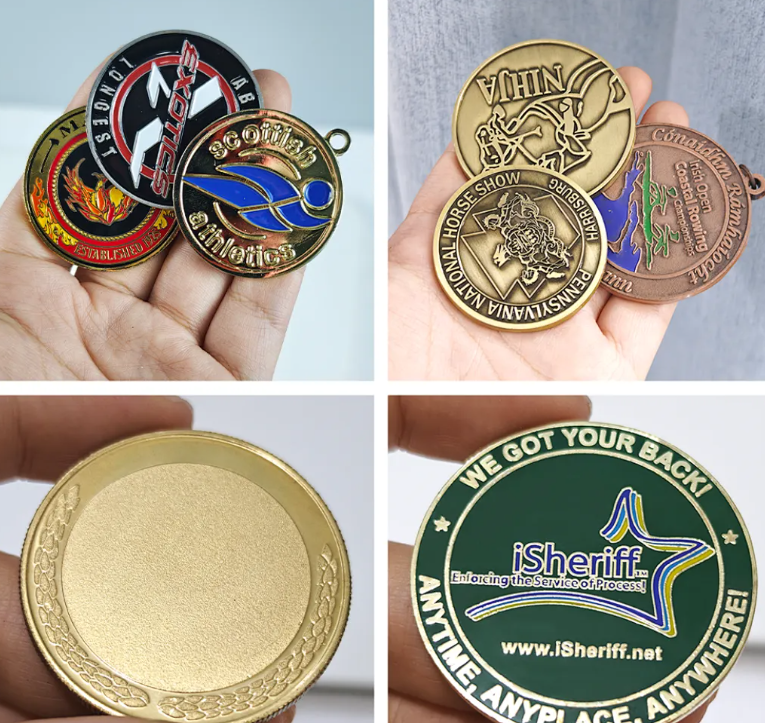
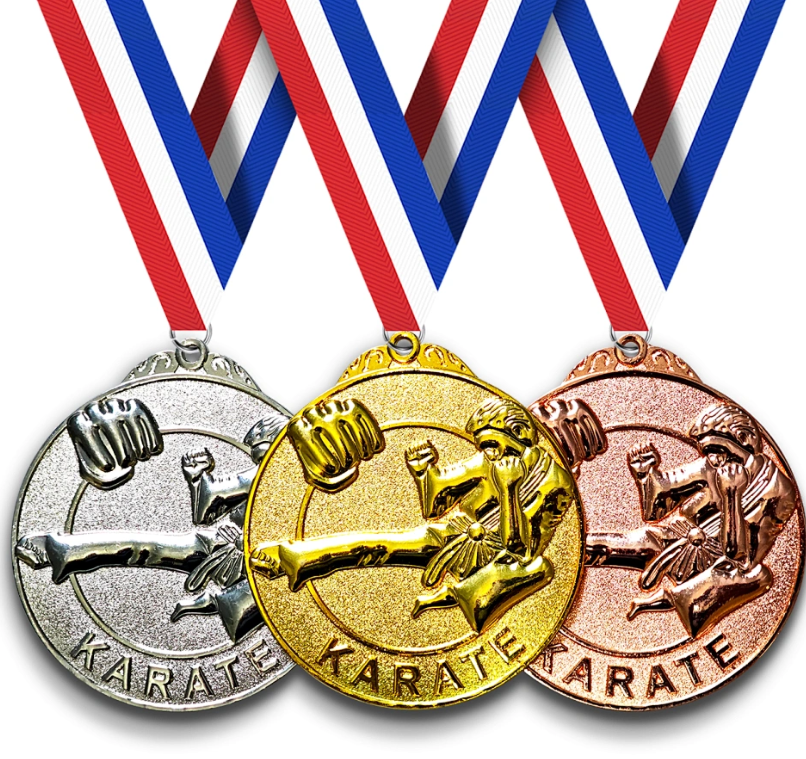
Longyi Metal Craft Products Co., Ltd, in Dongguan City, Guangdong Province focuses on the field of metal gift foreign trade. It‘s exquisite craftsmanship and efficient service have made it the prefered supplier of the world's top 500 companies.Mainly produces and customizes various medals, badges, hat pins and golf divot tool。
The factory is equipped with fully automatic casting production lines and CNC finishing equipment. The technical team independently developed 16 quality control nodes, from 3D modeling, precision casting tonano-electroplating. The original mirror polishing process makes the product gloss reach more than 98%,and the defect rate is less than 0.3%.
Support small batches of spot direct shipments, 48 hours of rapid delivery to ensure 15 days of delivery for European and American customers.24-hour online response to needs.cumulatively developed 800+ customized solutions for global customers, and the customerre purchase rate has exceeded 65% for 5 consecutive years.From pre - sale design, production, to delivery, we strictly control every detail. Your complete satisfaction is quaranteed!
Do Olympic Coaches Get Medals?
Do Olympic Prelim Swimmers Get Medals?


For more questions please
contact us

+86 1347760487

sales15@longyimetal.com

BUILDING 1, NO. 7, YINGHE 2ND STREET, YAOSHAN, XIEGANG TOWN, DONGGUAN CITY, GUANGDONG PROVINCE