
What Are Academic Olympic Medals?
What Are Academic Olympic Medals? & Other Unique Medal Questions

Related Medal Questions
- What Are Academic Olympic Medals?
- How Common Was Medal Counterfeiting in History?
- Do Astronauts Receive Special Medals for Space Missions?
- Are Religious Medals Associated with Specific Genders?
- What Themes Are Common in Paralympic Medal Designs?
- What Did Ancient Olympic "Medals" Look Like?
- Do Countries Ever Return Medals to Athletes?
- Have Animals Ever Received Medals for Service?
- Is Virtual Medal Collecting a Growing Trend?
- Do Any Cultures Burn Medals as Part of Rituals?
What Are Academic Olympic Medals?
Academic Olympic medals are awards given in international student competitions modeled after the Olympic Games, recognizing excellence in subjects like mathematics, physics, chemistry, and linguistics. The most prestigious is the International Mathematics Olympiad (IMO), where top high school students earn gold, silver, and bronze medals based on problem-solving scores. Unlike athletic Olympics, these academic medals are purely symbolic—made of gold-plated, silver-plated, or bronze metals—and emphasize intellectual achievement over physical prowess. Countries often celebrate academic medal winners with national recognition, and many recipients go on to careers in science, technology, and research. These medals highlight the global value placed on academic excellence alongside athletic achievement.
How Common Was Medal Counterfeiting in History?
Medal counterfeiting has a long history, particularly for valuable or prestigious medals. In ancient Rome, counterfeit military medals (used to claim veteran benefits) were so common that emperors like Diocletian issued edicts punishing forgers with death. During the Middle Ages, religious medals were frequently copied by craftsmen unable to afford precious metals, though many replicas were openly sold as devotional items rather than deceptive fakes. The 19th and 20th centuries saw widespread counterfeiting of military medals (e.g., Medal of Honor replicas) to fraudulently claim hero status. Modern anti-counterfeiting measures—including micro-engravings, holographic elements, and official registration—have reduced fakes, but rare Olympic medals and military honors still face counterfeiting attempts due to their high market value.
Do Astronauts Receive Special Medals for Space Missions?
Yes, astronauts receive specialized medals recognizing space missions, with designs varying by country and agency. NASA awards the Space Flight Medal to all astronauts who complete a spaceflight, featuring a rocket orbiting Earth. Exceptional missions earn higher honors: the Distinguished Service Medal for leadership in space exploration (e.g., Apollo moon missions) and the Exceptional Service Medal for extraordinary contributions. Russia’s Roscosmos awards the Hero of the Russian Federation medal (a gold star) to cosmonauts who complete significant missions. International space agencies also present joint medals for collaborative missions like the International Space Station. These medals honor the unique risks and achievements of space travel, often featuring celestial motifs like stars, planets, and rockets in their designs.
Are Religious Medals Associated with Specific Genders?
Most religious medals are not inherently gender-specific, but cultural traditions sometimes associate certain medals with men or women. For example, in Catholicism, the St. Michael Medal (honoring the warrior archangel) is often given to men, while the Miraculous Medal (featuring the Virgin Mary) is more commonly associated with women—though these are social conventions, not religious rules. Hindu medals depicting deities like Shiva or Lakshmi may be worn by people of any gender, as devotion transcends gender in most traditions. Some faiths explicitly reject gendered associations: Sikh medals (like those featuring the Khanda symbol) are worn equally by men and women as symbols of faith. Modern practice increasingly emphasizes personal connection over gender, with believers choosing medals based on spiritual meaning rather than societal expectations.
What Themes Are Common in Paralympic Medal Designs?
Paralympic medal designs consistently feature themes of resilience, transformation, and inclusion, reflecting the Games’ core values. Common motifs include: 1. Breaking barriers: Images of athletes overcoming obstacles (e.g., the 2018 PyeongChang medals featured a "path to victory" design). 2. Unity: Interconnected shapes symbolizing global community (e.g., 2020 Tokyo medals used circular patterns representing wholeness). 3. Nature: Elements like mountains or waves, symbolizing strength and adaptability (e.g., 2014 Sochi medals included mountain imagery). 4. Accessibility: Tactile features for visually impaired athletes, such as raised patterns or indentations. Many Paralympic medals also incorporate colors representing diversity and hope, moving beyond traditional gold-silver-bronze to include vibrant accents that celebrate the uniqueness of each athlete’s journey.
What Did Ancient Olympic "Medals" Look Like?
Ancient Olympic Games (776 BCE–393 CE) did not award metal medals like modern Games—instead, winners received olive wreaths (called "kotinos") as the highest honor. These wreaths were made from wild olive branches grown near Olympia, Greece, and were considered more valuable than gold due to their symbolic connection to Zeus, king of the gods. While no physical "medals" existed, victorious athletes often commissioned medals or statues for themselves after returning home, featuring their likeness and the event they won. These commemorative medals (usually bronze) were status symbols but not official Olympic prizes. The shift to metal medals occurred in the modern era, with the first Olympic gold medal awarded at the 1904 St. Louis Games—over 1,500 years after the ancient Games ended.
Do Countries Ever Return Medals to Athletes?
Yes, countries occasionally return medals to athletes in cases where initial disqualifications are overturned. The most common reason is reversed doping allegations—if an athlete’s positive test is found to be erroneous (e.g., due to contaminated supplements or testing errors), sports governing bodies may reinstate their results and return their medals. For example, in 2013, American sprinter Tyson Gay had his 2012 Olympic silver medal returned after his doping suspension was reduced, though team results remained adjusted. Similarly, Russian athletes from the 2014 Sochi Games regained medals after appeals proved they were wrongfully accused in state-sponsored doping scandals. Return protocols vary by sport but typically involve formal ceremonies to restore the athlete’s honor, with the medal presentation mirroring the original event.
Have Animals Ever Received Medals for Service?
Yes, animals have received medals for exceptional service, particularly in military and rescue contexts. The most famous is the Dickin Medal, awarded by the People’s Dispensary for Sick Animals (PDSA) since 1943 to animals that serve in war. Recipients include dogs (like Rob, a WWII mine-detection dog), pigeons (e.g., G.I. Joe, who saved 1,000 soldiers by delivering a critical message), and even a cat (Simon, who protected food supplies from rodents on a British warship). Military medals for animals also include the U.S. Military Working Dog Medal and Russia’s Order of Courage for service animals. These medals recognize animals’ roles in saving lives and supporting human efforts, with designs often featuring paw prints, wings, or animal silhouettes to honor their unique contributions.
Is Virtual Medal Collecting a Growing Trend?
Yes, virtual medal collecting is a growing trend, driven by digital platforms, gaming, and blockchain technology. In online games like "Fortnite" or "World of Warcraft," players earn virtual medals (called "achievements") for completing challenges, with rare medals gaining status among players. Blockchain-based platforms like OpenSea allow collectors to buy, sell, and trade non-fungible tokens (NFTs) representing virtual medals, some linked to real-world events (e.g., digital replicas of Olympic medals). Fitness apps also use virtual medals to motivate users—strava, for example, awards digital medals for completing marathons or monthly challenges. While these medals lack physical form, they hold value for collectors through scarcity, cultural significance, and the emotional achievement they represent, blurring the line between physical and digital memorabilia.
Do Any Cultures Burn Medals as Part of Rituals?
Burning medals is rare globally but has been used in specific cultural or protest rituals to symbolize rejection of authority or honor. In some Indigenous communities, medals given by colonial powers (like British or French "peace medals") were occasionally burned during resistance ceremonies, representing a refusal to accept foreign domination. During political protests, athletes have burned their own medals to draw attention to injustices—for example, Indian athletes burned medals in 2020 to protest government inaction on sports reforms. These acts are symbolic, using the medal’s perceived value to amplify messages of dissent. No mainstream religious or cultural traditions regularly include medal burning, as medals are typically preserved as honors; such acts are almost always tied to specific historical or political contexts.


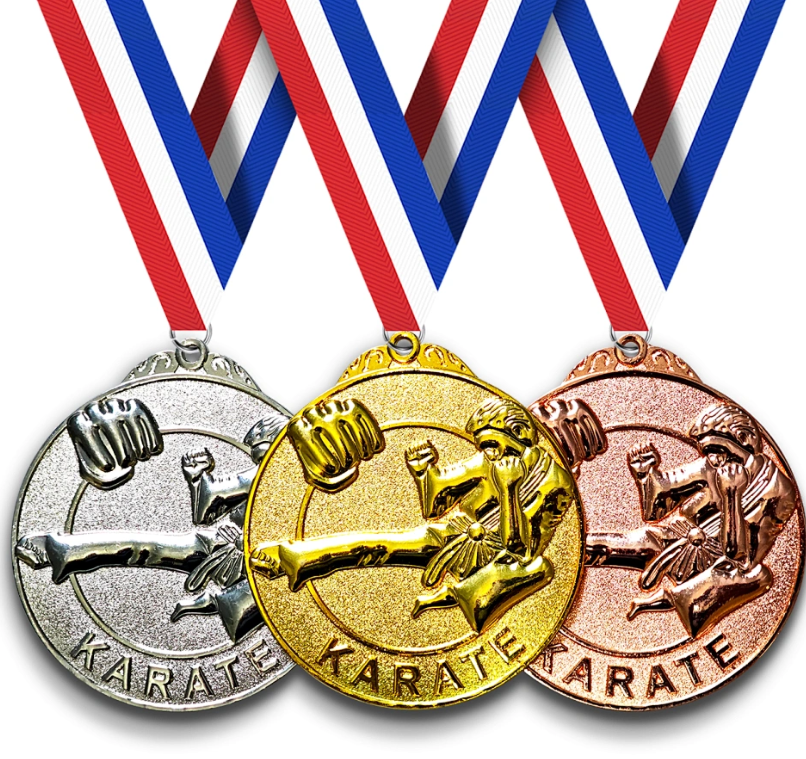
Longyi Metal Craft Products Co., Ltd, in Dongguan City, Guangdong Province focuses on the field of metal gift foreign trade. It‘s exquisite craftsmanship and efficient service have made it the prefered supplier of the world's top 500 companies.Mainly produces and customizes various medals, badges, hat pins and golf divot tool。
The factory is equipped with fully automatic casting production lines and CNC finishing equipment. The technical team independently developed 16 quality control nodes, from 3D modeling, precision casting tonano-electroplating. The original mirror polishing process makes the product gloss reach more than 98%,and the defect rate is less than 0.3%.
Support small batches of spot direct shipments, 48 hours of rapid delivery to ensure 15 days of delivery for European and American customers.24-hour online response to needs.cumulatively developed 800+ customized solutions for global customers, and the customerre purchase rate has exceeded 65% for 5 consecutive years.From pre - sale design, production, to delivery, we strictly control every detail. Your complete satisfaction is quaranteed!
Are Olympic Medals More Valuable Than Military Medals?
What Are Olympic Test Event Medals?


For more questions please
contact us

+86 1347760487

sales15@longyimetal.com

BUILDING 1, NO. 7, YINGHE 2ND STREET, YAOSHAN, XIEGANG TOWN, DONGGUAN CITY, GUANGDONG PROVINCE