
What Is a St. Christopher Medal?
What Is a St. Christopher Medal? Answers to 9 More Medal Questions
Medals come in many forms—religious, military, athletic—and people often have specific questions about each type. What does a St. Christopher medal represent? Do Olympic coaches get medals too? Am I considered a military service medal veteran? Below, you’ll find clear, straightforward answers to these and other common inquiries, drawing on religious traditions, military regulations, and Olympic guidelines.
Table of Contents
Religious Medal Questions
Religious medals like St. Christopher and St. Benedict pieces hold deep spiritual meaning for many people. These questions address their purpose, origins, and where to find authentic, blessed versions.
1. What is a St. Christopher medal
A St. Christopher medal is a small religious pendant with roots in Catholic and Orthodox Christian traditions, honoring St. Christopher—the patron saint of travelers. Its key features and meaning include:
- Origins: St. Christopher was a 3rd-century martyr said to have carried a child (later revealed to be Christ) across a dangerous river. The story made him a symbol of protection for those journeying, and medals bearing his image emerged in the Middle Ages as talismans for travelers.
- Design: Most medals feature a detailed image of St. Christopher carrying the child on his shoulders, often with a staff in one hand. Inscriptions are common too—typically "St. Christopher Protect Us" or the Latin phrase "Noli me tangere" ("Do not touch me") alongside his name.
- Materials: Traditional medals are made of sterling silver, gold-plated brass, or stainless steel, though modern versions may use enamel or wood for a more decorative look. The material choice often reflects personal preference or budget—silver is popular for its timeless appearance, while stainless steel is durable for everyday wear.
- Spiritual Meaning: While originally associated with travel protection, the medal has expanded to symbolize general safety and faith. Many people wear it not just for trips, but as a reminder of their beliefs or a way to feel guarded in daily life.

2. Where to buy a blessed St. Benedict medal
A St. Benedict medal’s spiritual significance comes from being blessed by a Catholic priest, so it’s important to buy from sources that offer authentically blessed pieces or can arrange a blessing. The best places to purchase one include:
- Local Catholic Churches: Many parishes have gift shops that sell blessed religious items, including St. Benedict medals. The advantage here is that the medal is already blessed—no extra steps needed. Ask a parish staff member for help if you don’t see them displayed; some shops keep blessed items behind the counter.
- Catholic Bookstores: Chains like Catholic Answers or local religious bookstores stock a variety of St. Benedict medals. Most can arrange for a priest to bless the medal before you take it home—just ask the staff when you purchase. These stores also often carry books about St. Benedict if you want to learn more about the saint’s significance.
- Online Catholic Retailers: Trusted websites like The Catholic Company, Leaflet Missal, or EWTN Religious Catalogue sell St. Benedict medals. Check the product description—some specify that the medal is pre-blessed, while others note that you’ll need to have it blessed by a local priest. If it’s not pre-blessed, the retailer may include a guide on how to request a blessing.
- Benedictine Monasteries: Monasteries founded by the Benedictine order (like St. Meinrad Archabbey in Indiana or Pluscarden Abbey in Scotland) often sell handcrafted St. Benedict medals. These are particularly special because they’re made by monks, and many come with a certificate of blessing directly from the monastery.
3. Why wear a St. Christopher medal
Wearing a St. Christopher medal is a personal practice rooted in faith and tradition, with several key reasons people choose to wear one:
- Travel Protection: This is the oldest and most traditional reason. For centuries, travelers—whether on long journeys, daily commutes, or even flights—have worn the medal to seek St. Christopher’s intercession for safe passage. It’s common to see truck drivers, pilots, or frequent travelers with a St. Christopher medal on a chain or in their vehicle.
- Spiritual Comfort: Beyond travel, many wear the medal as a source of comfort during uncertain times. It can serve as a reminder of their faith, a symbol of God’s protection, or a way to feel connected to their religious community. For some, it’s a tangible representation of their beliefs that they can carry with them always.
- Family Heirloom: St. Christopher medals are often passed down through families. A parent might give one to a child before they leave for college, or a grandparent might pass on a vintage medal as a keepsake. Wearing it in this case honors family traditions and keeps loved ones’ memories close.
- Cultural Identity: In some Catholic or Orthodox cultures, wearing a St. Christopher medal is a way to express cultural heritage. It can signal membership in a faith community or a connection to cultural traditions that value spiritual protection and devotion to saints.
Military Medal Questions
These questions cover military service eligibility and technical terms used in medal creation—key topics for veterans, service members, and those researching military honors.
4. Am I an armed forces service medal veteran
In the United States, you’re considered an "Armed Forces Service Medal veteran" if you meet two specific criteria set by the Department of Veterans Affairs (VA) and military branches:
- Honorable Service: You must have served on active duty, in the Reserve, or in the National Guard with an honorable discharge (or a general discharge under honorable conditions). Dishonorable or bad-conduct discharges disqualify you from this designation.
- Award of an Armed Forces Service Medal: You must have been officially awarded at least one Armed Forces Service Medal. These medals recognize service during specific periods or campaigns, not just valor in combat. Common examples include:
- National Defense Service Medal (NDSM): Awarded for service during designated conflict eras (e.g., Gulf War, Global War on Terrorism).
- Armed Forces Expeditionary Medal (AFEM): Awarded for service in expeditions or operations not covered by other campaign medals.
- Global War on Terrorism Service Medal (GWOTSM): Awarded for service in support of the Global War on Terrorism.
- Korea Defense Service Medal (KDSM): Awarded for service in the Korean theater after July 27, 1954.
To verify your status:
- Check your DD Form 214 (Certificate of Release or Discharge from Active Duty)—this document lists all medals awarded during your service.
- If you don’t have your DD 214, request a copy from the National Archives online or by mail. You can also contact your branch’s medal office for verification.
- For Reserve or National Guard members: You qualify only if you were called to active duty and awarded a service medal during that time—drill or training service alone doesn’t count.
5. What does GA mean for in medal working
In the context of medal working—the process of designing, crafting, and finishing medals—"GA" is an abbreviation with a clear, industry-specific meaning:
- Primary Definition: Gold Alloy: The most common use of "GA" in medal working is to refer to "Gold Alloy"—a mixture of pure gold and other metals (like silver, copper, or zinc) used to create medal surfaces or plating. Pure gold (24 karat) is too soft and malleable for most medals—it would scratch easily or lose its shape over time. Alloying it with other metals makes it harder and more durable while retaining its gold color.
- Alloy Combinations: Medal makers often specify the type of gold alloy using "GA" followed by a karat number. For example:
- GA-18K: 18-karat gold alloy (75% pure gold, 25% other metals)—common for high-end medals or plating on Olympic gold medals.
- GA-14K: 14-karat gold alloy (58.3% pure gold, 41.7% other metals)—used for more affordable gold-plated medals or religious medals.
- Why Alloys Matter: The type of gold alloy affects the medal’s appearance, durability, and cost. Higher-karat alloys (like 18K) have a richer, more yellow color but are still durable enough for display. Lower-karat alloys (like 14K) are more affordable and resistant to wear, making them a practical choice for medals that will be handled frequently.
- Rare Alternate Meanings: In very specific cases, "GA" might stand for "Gold Application" (referring to the process of applying gold plating) or "Grand Alloy" (a historical term for high-quality gold-silver alloys). However, these are rare—"Gold Alloy" is the standard interpretation in modern medal working.
6. What does OD mean for in medal working
In medal working, "OD" is a widely used abbreviation tied to military and practical design—its meaning is consistent across most medal-making contexts:
- Primary Definition: Olive Drab: The most common use of "OD" in medal working is to refer to "Olive Drab"—a dark, muted green color with brown undertones. This color has deep roots in military design, originally used for uniforms and equipment to provide camouflage. In medals, it’s typically used for:
- Ribbons: Many military service medals (like the National Defense Service Medal or Army Good Conduct Medal) have OD-colored ribbons or ribbon stripes.
- Enamel Details: Some medals use OD enamel for background elements or to highlight military-themed designs (e.g., a soldier’s uniform or a tank).
- Backing Materials: OD-colored fabric or felt is often used as a backing in shadow boxes for military medals, as it complements the medals’ colors and aligns with military traditions.
- Color Specifications: Medal makers follow standard color codes for OD to ensure consistency. The most common standard is MIL-STD-595, which defines Olive Drab as a specific shade (color code 34088) with exact proportions of green, blue, and brown pigments. This ensures that an OD ribbon on a WWII-era medal matches the OD ribbon on a modern medal.
- Why OD Is Used: Beyond its military association, OD is a practical color for medals—it doesn’t show dust or minor stains as easily as lighter colors, and it provides a neutral backdrop that makes metal medal surfaces (like brass or silver) stand out. For military collections, it also helps create a cohesive, tradition-rich display.
- Rare Alternate Meanings: In extremely specialized cases, "OD" might stand for "Oxide Dark" (referring to a dark metal oxide finish) or "Over-Depth" (describing a medal’s thickness). However, these are almost unheard of in mainstream medal working—"Olive Drab" is always the first interpretation to consider.
Athletic & Olympic Medal Questions
These questions focus on Olympic honors, race medals, and athlete compensation—topics of interest for sports fans, athletes, and collectors.
7. Do team coaches get Olympic medals
While Olympic coaches play a critical role in athletes’ success, they do not receive the same official Olympic medals as competing athletes. However, they are often recognized through other means:
- IOC Rule: Athletes Only for Official Medals: The International Olympic Committee (IOC) reserves official gold, silver, and bronze medals exclusively for athletes who compete in official Olympic events. Coaches, trainers, team doctors, and support staff are not eligible for these medals—they are meant to honor individual or team athletic achievement.
- Commemorative Medals from National Committees: Most national Olympic committees (NOCs) provide coaches with commemorative medals or plaques to recognize their contribution. These are often designed to match the official Olympic medals but lack the IOC’s official stamp. For example:
- The U.S. Olympic & Paralympic Committee (USOPC) awards "Coach Recognition Medals"—silver-colored medals with the USOPC logo and the Games’ year.
- The Canadian Olympic Committee (COC) gives coaches custom medals with the Canadian flag and the sport’s logo, along with a cash bonus in some cases.
- Team Gifts and Replicas: Some teams choose to honor their coaches with replica Olympic medals. These replicas are identical in appearance to the official medals but are not counted in the Games’ medal tally. For example, the 2020 Japanese women’s soccer team gave their coach a replica gold medal after winning the tournament.
- Rare High-Level Honors: Exceptional coaches may receive the Olympic Order—the IOC’s highest honor. This is a gold or silver medal (separate from event medals) recognizing lifelong contributions to Olympic sports. Recipients include legendary coaches like basketball’s Mike Krzyzewski or gymnastics’ Béla Károlyi, but this honor is rare and not tied to a single Games.
8. Do you get a medal for a 5K
Whether you get a medal for a 5K race depends on the event’s type (competitive vs. fun run) and the organizer’s rules, but medals are common for both participants and top finishers:
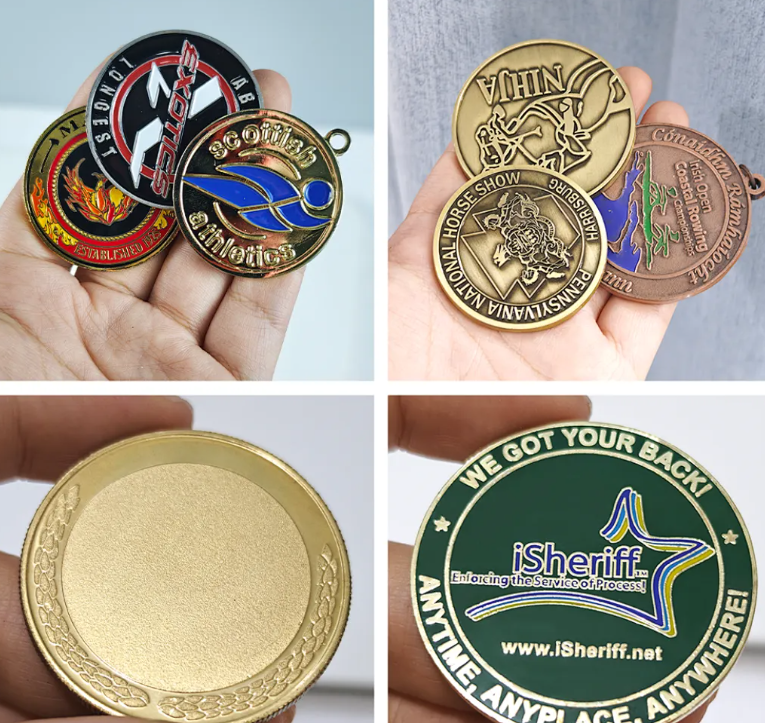
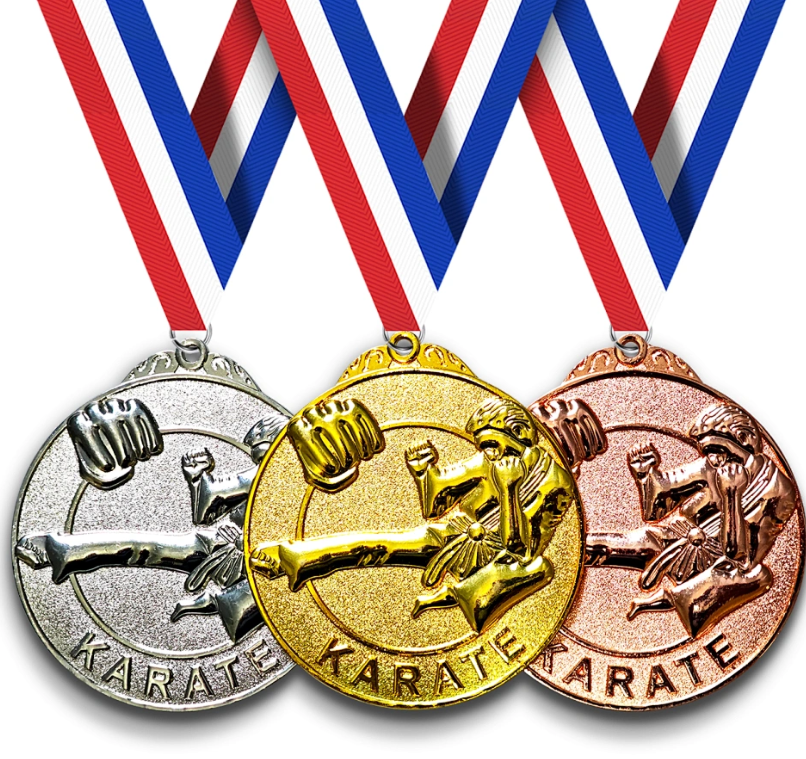
- Participation Medals (Most Common): The majority of 5K races—especially "fun runs," charity 5Ks, or community events—award a participation medal to everyone who completes the race. These medals are typically small (1.5–2 inches in diameter), made of brass or zinc with a colored enamel finish, and feature the race’s name, date, and distance on the front. They’re meant to celebrate achievement and serve as a keepsake for participants.
- Award Medals for Top Finishers: Competitive 5Ks (like those part of a racing series or with cash prizes) usually give medals to top finishers in specific categories:
- Overall winners: Gold (1st place), silver (2nd place), bronze (3rd place) medals for the fastest male and female runners.
- Age-group winners: Medals for top finishers in age brackets (e.g., 18–24, 25–29, 30–34) to ensure fair recognition across different age groups.
- Special categories: Some races offer medals for masters runners (40+), wheelchair participants, or walkers.
- Exceptions: No-Medal 5Ks: A small number of 5Ks—usually low-budget events or informal group runs—may not offer medals. Instead, they might provide t-shirts, water bottles, or other swag. These events often advertise "no medal" upfront to manage expectations.
- What to Expect: To know if a 5K offers medals, check the race’s website or registration page. Most event organizers list "finisher swag" or "awards" sections that specify whether medals are available. For charity 5Ks, participation medals are often used to encourage sign-ups, so they’re almost always included.
9. How much does Kenya pay for a gold medal
Kenya, known for its dominance in long-distance running, has a formal program to reward Olympic medalists—this includes cash prizes and additional perks for gold, silver, and bronze medalists. As of 2024, the rewards for a gold medal are:
- Cash Prize: The Kenyan government typically awards KES 2 million (approximately USD 13,800) to athletes who win an Olympic gold medal. This is part of the "Olympic Medal Reward Scheme" established by the Kenyan Ministry of Sports to recognize athletic achievement and encourage future generations of athletes.
- Additional Perks: Beyond cash, gold medalists often receive other benefits:
- Scholarships: Many gold medalists are offered full scholarships for themselves or their children to attend Kenyan universities or technical colleges.
- Government Jobs: Some athletes receive offers for civil service positions in the Ministry of Sports or other government departments, providing long-term job security.
- Sponsorships: While not directly from the government, Olympic gold medalists in Kenya often attract lucrative sponsorships from sports brands (like Nike or Adidas) or local companies, which can be more valuable than the government’s cash prize.
- Comparison to Other Medals: The Kenyan government’s rewards are tiered by medal type:
- Silver medal: KES 1.5 million (~USD 10,350) plus partial scholarships.
- Bronze medal: KES 1 million (~USD 6,900) plus educational grants.
- Historical Context: Kenya’s medal reward program has evolved over time. It was expanded significantly after the 2008 Beijing Olympics, where Kenyan athletes won 14 medals (5 gold, 5 silver, 4 bronze), to further invest in the country’s athletic talent. The cash amounts are adjusted periodically for inflation, though changes are usually small (5–10% every 4–6 years).
10. Are gold Olympic medals made of gold
Despite their name, modern Olympic "gold" medals are not made of solid gold—they are primarily silver with a gold coating. Here’s the detailed breakdown:
- Current Composition: Since 1912, no Olympic gold medal has been made of solid gold. Today’s gold medals follow strict guidelines set by the International Olympic Committee (IOC):
- Core Material: 92.5% pure silver (the same standard as sterling silver). This gives the medal its weight and structure—solid gold would be too soft and expensive.
- Gold Plating: At least 6 grams of 24-karat gold (pure gold) plated over the silver core. This coating gives the medal its distinctive gold color and symbolic value.
- Total Gold Content: Only about 1.2% of the medal’s total weight (usually 550–600 grams) is actual gold. For example, a 556-gram 2024 Paris Olympic gold medal contains just 6 grams of gold.
- Why Solid Gold Was Discontinued: Two key reasons led to the shift away from solid gold:
- Cost: By the 1920s, the price of gold had risen sharply. A solid gold medal at the 1920 Antwerp Games would have cost over $1,000 (equivalent to ~$15,000 today). With hundreds of medals awarded per Games, solid gold became financially unsustainable for host cities and the IOC.
- Durability: Solid gold is relatively soft (2.5 on the Mohs scale of hardness), meaning it would scratch easily or lose its shape with handling. The silver core with gold plating is harder and more resistant to wear, ensuring medals remain in good condition for years.
- Historical Exception: Solid Gold Medals (1904–1912): The only Olympic Games to award solid gold medals were St. Louis (1904), London (1908), and Stockholm (1912). These medals were small (24–30 grams) and made of 99.9% pure gold—far lighter than modern medals. A 1912 Stockholm gold medal sold at auction for $260,000 in 2023, reflecting its rarity and historical value.
- Symbolism Over Metal Value: While the gold content is low, Olympic gold medals remain highly valuable due to their symbolic meaning. A gold medal won by a star athlete (like Usain Bolt or Simone Biles) can sell for $1 million or more at auction, even though its metal value is only ~$800.
Final Thoughts on Medal Meanings
Whether religious, military, or athletic, medals tell stories—of faith, service, and achievement. Understanding their purpose, origins, and context helps us appreciate them beyond their physical form. A St. Christopher medal carries the hope of safe travel; a military service medal honors years of dedication; an Olympic medal represents years of training and sacrifice.
For those who wear, collect, or gift medals, these answers can deepen that appreciation. Whether you’re buying a blessed St. Benedict medal for a loved one, verifying your military veteran status, or simply curious about Olympic traditions, knowing the "why" behind medals makes them even more meaningful.
As with any meaningful object, the most important thing is the value they hold for you—whether spiritual, sentimental, or historical. With this knowledge, you can better care for, display, and honor the medals that matter most.

Longyi Metal Craft Products Co., Ltd, in Dongguan City, Guangdong Province focuses on the field of metal gift foreign trade. It‘s exquisite craftsmanship and efficient service have made it the prefered supplier of the world's top 500 companies.Mainly produces and customizes various medals, badges, hat pins and golf divot tool。
The factory is equipped with fully automatic casting production lines and CNC finishing equipment. The technical team independently developed 16 quality control nodes, from 3D modeling, precision casting tonano-electroplating. The original mirror polishing process makes the product gloss reach more than 98%,and the defect rate is less than 0.3%.
Support small batches of spot direct shipments, 48 hours of rapid delivery to ensure 15 days of delivery for European and American customers.24-hour online response to needs.cumulatively developed 800+ customized solutions for global customers, and the customerre purchase rate has exceeded 65% for 5 consecutive years.From pre - sale design, production, to delivery, we strictly control every detail. Your complete satisfaction is quaranteed!
Are gold Olympic medals made of gold?
How to Display Military Medals


For more questions please
contact us

+86 1347760487

sales15@longyimetal.com

BUILDING 1, NO. 7, YINGHE 2ND STREET, YAOSHAN, XIEGANG TOWN, DONGGUAN CITY, GUANGDONG PROVINCE